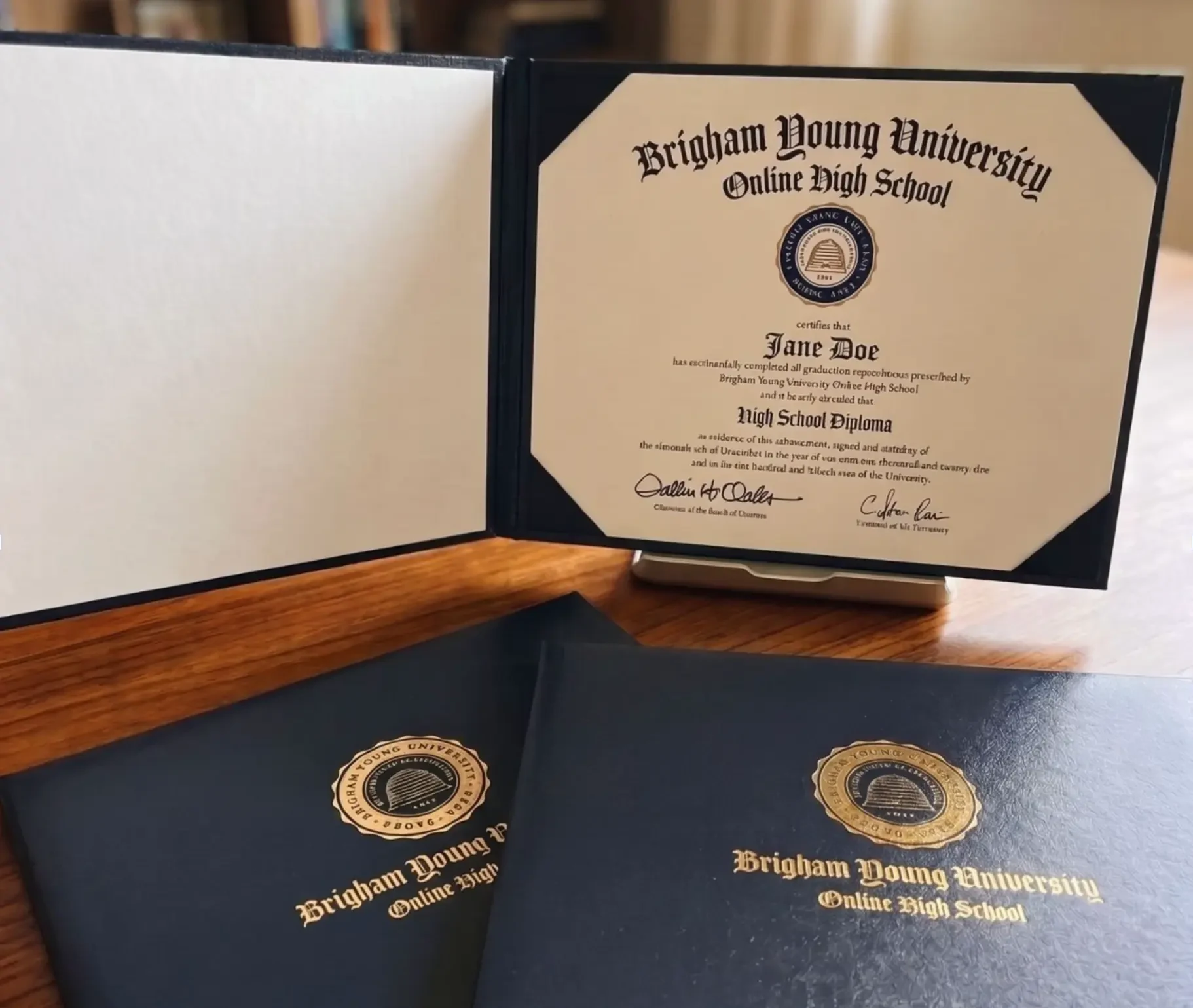
HSE-BYU AMERICAN CURRICULUM
High School Diploma
A three-year sequenced program, beginning in 9th grade and continuing through 11th grade, requiring six hours of dedication per week. The High School Diploma comprises 12 courses from the official American curriculum.
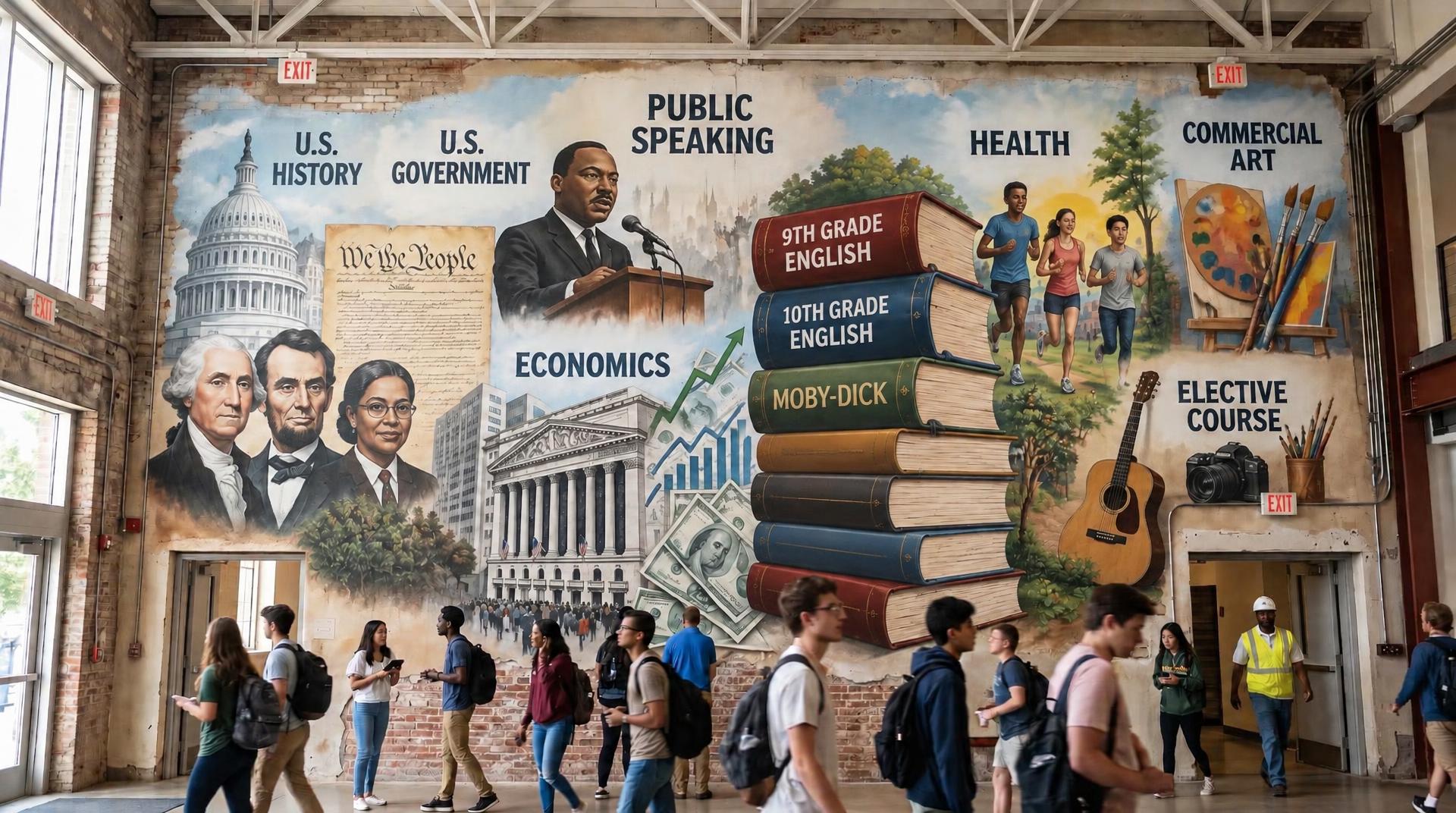
12 Courses
- 9th GRADE ENGLISH Part 1
- 9th GRADE ENGLISH Part 2
- 10th GRADE ENGLISH Part 1
- 10th GRADE ENGLISH Part 2
- PUBLIC SPEAKING
- HEALTH
- U.S. HISTORY Part 1
- U.S. HISTORY Part 2
- U.S. GOVERNMENT
- ECONOMICS
- INTRODUCTION TO COMMERCIAL ART
- ELECTIVE COURSE (chosen by students or by the school)
9th GRADE ENGLISH Part 1
9th GRADE ENGLISH Part 1 explores the theme “The Value of a Story”. The course is divided into 3 units (5 modules each). The first focuses on the importance of storytelling, the history of storytelling and what happens in our brains when we read. The second focuses on reading an anchor text and identifying the characters and structure of a narrative about another person. The third guides students through writing their personal narratives.
Overall, this is a foundational course that begins students' high school journey while developing not only reading and writing skills, but also helping them grow, mature and move along the incredible path ahead of them.
In this course, students will read an anchor novel: Seedfolks, by Paul Fleischman.
9th GRADE ENGLISH Part 2
9th GRADE ENGLISH Part 2 explores the themes of Freedom of Expression and Censorship. Students will focus on defining censorship and dystopia, choosing a dystopian novel and using reading strategies to assess whether texts are reliable. They will then read shorter dystopian texts that explore freedom of expression and censorship. Finally, they will perform a critical reading, write an argumentative essay, conduct research and explore the power of the media.
10th GRADE ENGLISH Part 1
10th GRADE ENGLISH Part 1 presents the theme “I Need a Hero” and is divided into 3 teaching units. In Unit 1, students examine archetypes — the hero, the antihero, the villain and the trickster — and learn how these characters play important roles in telling a story. The characteristics of a hero are examined and compared to those of other archetypes.
In Unit 2, students focus on heroes in literature. They are introduced to The Odyssey. While reading the novel, they analyze its characters and heroes and assess whether the novel's hero demonstrates heroic characteristics. They also analyze the hero's journey taken by the novel's characters.
In Unit 3, students apply the principles and concepts of the hero's journey to their own lives. This unit allows them to examine moments of courage in their lives and write about their own journeys.
10th GRADE ENGLISH Part 2
10th GRADE ENGLISH Part 2 explores the theme “How Culture Shapes Identity”. The course is divided into three teaching units. In Unit 1 (Modules 1–5), students apply cognitive strategies and examine literary elements in Things Fall Apart, by Chinua Achebe, including point of view, author's choices, characterization and theme.
In Unit 2 (Modules 6–11), students focus on making connections through shared experiences. They examine food, traditions, customs, childhood experiences, clothing, names and homes in different cultures.
In Unit 3 (Modules 12–15), students apply the principles and concepts of cultural identity to research and expository writing on a musical theme. They submit their final work, take the final exam and earn their optional microcredential in Module 16.
PUBLIC SPEAKING
PUBLIC SPEAKING is an introduction to public speaking that involves analyzing a variety of speeches based on classical and contemporary theories. Students also learn to speak in an organized and effective manner and to prepare a complete speech outline with supporting material.
HEALTH
HEALTH focuses on adopting a healthy lifestyle, which includes the following major ideas: mental, emotional and physical health; nutrition and exercise; developing skills for healthy relationships; and prioritizing safety. This course aims not only to educate students about health, but also to empower them to make healthy choices throughout their lives and encourage people around them to make healthy choices as well.
U.S. HISTORY Part 1
UNITED STATES HISTORY TO 1877 is a general overview of United States history from 1492 to 1877; the course guides students through the colonization of the Americas, the French and Indian War, the American Revolutionary War, westward expansion and the American Civil War. This is the first course in a two-part United States History series (HIST 041 and HIST 043).
U.S. HISTORY Part 2
UNITED STATES HISTORY FROM 1877 is a general overview of United States history from 1877 to the present; the course guides students through industrialization, World Wars I and II, the civil rights movement and much more. This is the second course in a two-part United States History series (HIST 041 and HIST 043).
U.S. GOVERNMENT
U.S. GOVERNMENT AND CIVICS aims to help students become better-informed and more effective participants in the political system.
This course helps students acquire the knowledge and understanding they need about the foundations and structures of the United States political system to become effective citizens. Students read and learn about the fundamental political, economic and social values and principles of the United States.
By the end of the course, students will understand the main philosophical foundations and privileges of American citizenship. They will understand the structures, processes and principles of government within which American citizens participate and influence their government.
ECONOMICS
The subject of ECONOMICS is all around us. Many simple decisions we make every day are economic choices. Think of economics as the science of common sense. It analyzes human behavior in relation to the satisfaction of wants. It can encompass the entire world or a single individual.
Knowledge of economics is important when buying a car or a house and even when saving for retirement. It is also important for people who have jobs or who are deciding whether to attend college. This course prepares students for the future by giving them the knowledge to make individual economic choices and political decisions.
ECONOMICS deals with the analysis of the choices we all make. It helps us see how individuals, families, businesses and governments make choices they believe will lead to the greatest success.
INTRODUCTION TO COMMERCIAL ART
INTRODUCTION TO COMMERCIAL ART teaches the introductory elements of graphic design, the concept of simplification, and the history and function of typography. Students also apply principles and elements of design, employ advertising principles and concepts, and use the computer to research, create or manipulate images.
ELECTIVE COURSE (chosen by students or by the school)
ELECTIVE COURSE are freely chosen by the student, or by the school, from a list with almost 100 options, and are taken independently or in a classroom.
Features
12 courses from the official American curriculum;
Program created for non-native students from non-English-speaking countries (English Language Learners – ELL);
Authentic English-language immersion: 3 years of classes in which students read, write, listen and speak in English;
CLIL methodology: Content-Language Integrated Learning;
Teachers with international experience sharing their expertise through interaction in the partner school classroom;
Coordinator at the partner school;
Dual Diploma: after completing all required courses, students receive two official high school diplomas, one Brazilian and one American;
American school transcript;
Exclusive classrooms for International Curriculum students, with up to 25 students;
Minimum of 6 classes per week;
Duration: 30 weeks per year;
Sequenced: High School grades and courses are taken in sequence;
HSE Selection Test: A2 level (CEFR) required;
Printed books for students and teachers, with lesson planning and support materials.
Brazilian and American Diplomas
Upon successful completion of all courses, students receive two official high school diplomas: one from their Brazilian school and one from Brigham Young University High School.